
Early Symptoms of Diabetes are often mild and develops slowly and silently. Many of the early symptoms are mild, vague, or easily ignored. Many people live with undiagnosed Type 2 diabetes for years, during which time high blood sugar gradually damages vital organs.
Recognizing the early warning signs of Type 2 diabetes is crucial. Early diagnosis allows timely treatment, lifestyle changes, and prevention of long-term complications affecting the heart, kidneys, eyes, and nerves.
What is Type 2 Diabetes?
Type 2 diabetes is a condition in which the body either does not produce enough insulin or cannot use insulin effectively (a state known as insulin resistance). Insulin is the hormone that helps glucose move from the bloodstream into the cells to be used as energy.
When insulin does not work properly, glucose builds up in the blood, leading to high blood sugar levels, which cause the symptoms described below.
Why Early Symptoms of Diabetes Are Often Missed
Unlike Type 1 diabetes, which often presents suddenly, Type 2 diabetes develops gradually. Early symptoms may:
- Appear slowly over months or years
- Be mild or intermittent
- Be mistaken for stress, aging, or lifestyle fatigue
As a result, many individuals do not seek medical care until routine blood tests or complications reveal the condition.
What are the 10 most common Early Symptoms of Type 2 Diabetes?
Increased Thirst (Polydipsia)
One of the earliest and most common symptoms is persistent thirst.
When blood sugar levels are high, the kidneys work harder to remove excess glucose through urine. This leads to fluid loss, causing dehydration and increased thirst. People may notice:
- Constant dry mouth
- Needing to drink water frequently
- Thirst that does not improve even after drinking fluids
Frequent Urination (Polyuria)
High blood sugar causes excess glucose to spill into the urine, pulling water along with it. This results in:
- Passing urine more often than usual
- Waking up at night to urinate
- Producing large volumes of urine
Frequent urination is often noticed together with increased thirst.
Increased Hunger (Polyphagia)
Despite eating normally or even more than usual, people with early diabetes may feel constantly hungry.
This happens because glucose cannot efficiently enter the body’s cells due to insulin resistance. As a result, cells are “starved” of energy, triggering hunger signals even when blood sugar levels are high.
Unexplained Fatigue and Weakness
Feeling unusually tired is a common but often overlooked symptom.
When glucose cannot be used properly for energy, the body struggles to meet its energy needs. This can lead to:
- Persistent tiredness
- Reduced stamina
- Difficulty concentrating
- Feeling drained even after adequate rest
Fatigue related to diabetes does not improve with sleep alone.
Blurred Vision
High blood sugar can cause fluid shifts in the lenses of the eyes, affecting their ability to focus. This may result in:
- Blurred or fluctuating vision
- Difficulty focusing on fine details
- Temporary changes in eyesight
These vision changes may come and go in the early stages but should never be ignored.
Slow Healing of Wounds and Infections
People with early Type 2 diabetes may notice that:
- Cuts or wounds take longer to heal
- Minor injuries heal poorly
- Frequent skin or soft tissue infections occur
High blood sugar affects blood circulation and weakens the immune response, making healing slower and infections more likely.
Frequent Infections
Recurrent infections may be an early warning sign, including:
- Urinary tract infections
- Skin infections
- Fungal infections
Women may experience recurrent vaginal yeast infections, while men may notice balanitis (inflammation of the foreskin).
Tingling or Numbness in Hands and Feet
Early nerve involvement can cause:
- Tingling sensations
- Numbness
- Burning or prickling feelings
This occurs due to prolonged exposure of nerves to high glucose levels and is an early form of diabetic neuropathy.
Unexplained Weight Changes
Some people may experience unintentional weight loss, while others gain weight, particularly around the abdomen.
Weight changes occur due to altered metabolism, insulin resistance, and the body’s inability to use glucose efficiently.
Darkened Skin Patches (Acanthosis Nigricans)
Dark, velvety patches of skin may appear around:
- Neck
- Armpits
- Groin
This condition is strongly associated with insulin resistance and is often an early visible sign of Type 2 diabetes.
Who Is at Higher Risk of Early Type 2 Diabetes?
Early symptoms are more likely to be missed in people with risk factors such as:
- Family history of diabetes
- Overweight or obesity
- Sedentary lifestyle
- Poor dietary habits
- History of gestational diabetes
- Polycystic ovary syndrome (PCOS)
- Increasing age
When Should You See a Doctor?
You should seek medical advice if you:
- Have multiple symptoms listed above
- Notice persistent thirst or frequent urination
- Experience unexplained fatigue or vision changes
- Have a family history of diabetes
Early blood tests such as fasting glucose, HbA1c, or oral glucose tolerance test can confirm the diagnosis.
Importance of Early Detection
Identifying Type 2 diabetes early allows:
- Better blood sugar control
- Prevention of complications
- Reduced need for intensive medications
- Improved quality of life
With timely lifestyle changes and medical care, many people can achieve excellent long-term outcomes.
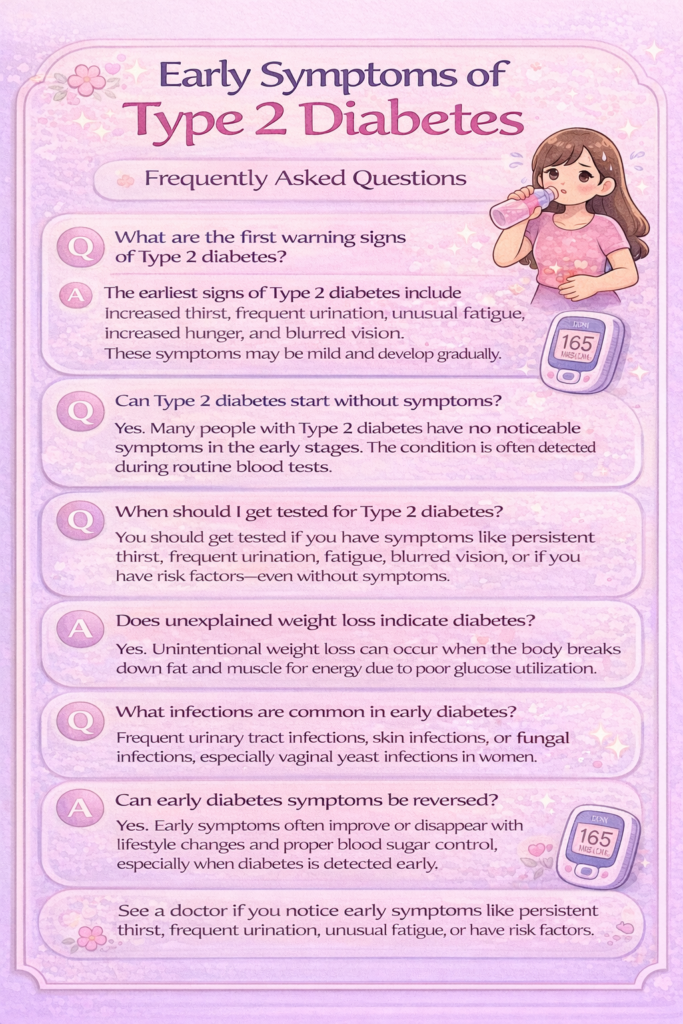
Frequently Asked Questions:
1. What are the first warning signs of Type 2 diabetes?
The earliest signs of Type 2 diabetes include increased thirst, frequent urination, unusual fatigue, increased hunger, and blurred vision. These symptoms may be mild and develop gradually.
2. Can Type 2 diabetes start without symptoms?
Yes. Many people with Type 2 diabetes have no noticeable symptoms in the early stages. The condition is often detected during routine blood tests.
3. How early can symptoms of Type 2 diabetes appear?
Symptoms can appear months or even years after blood sugar levels start rising. This delayed onset is why early diabetes often goes undiagnosed.
4. Is frequent urination always a sign of diabetes?
Not always, but frequent urination—especially when accompanied by increased thirst—can be an early sign of high blood sugar and should be evaluated.
5. Why does Type 2 diabetes cause fatigue?
Fatigue occurs because glucose cannot enter the cells efficiently due to insulin resistance, leaving the body with less usable energy despite high blood sugar levels.
6. Can blurred vision be an early symptom of diabetes?
Yes. High blood sugar can affect the eye lens, causing temporary blurred vision, which may improve once blood sugar levels are controlled.
7. What infections are common in early diabetes?
People with early diabetes may experience frequent urinary tract infections, skin infections, or fungal infections, especially vaginal yeast infections in women.
8. Does unexplained weight loss indicate diabetes?
Yes. Unintentional weight loss can occur when the body breaks down fat and muscle for energy due to poor glucose utilization.
9. Who is most at risk of developing early Type 2 diabetes?
People with obesity, family history of diabetes, sedentary lifestyle, PCOS, history of gestational diabetes, or age above 35–40 years are at higher risk.
10. When should I get tested for Type 2 diabetes?
You should get tested if you have symptoms like persistent thirst, frequent urination, fatigue, blurred vision, or if you have risk factors—even without symptoms.
11. Can stress cause symptoms similar to diabetes?
Stress can raise blood sugar levels temporarily and may worsen symptoms, but it does not replace proper testing for diabetes.
12. Are early diabetes symptoms reversible?
Early symptoms often improve or disappear with timely lifestyle changes and proper blood sugar control, especially when diabetes is detected early.
13. What blood test confirms Type 2 diabetes?
Common diagnostic tests include fasting blood sugar, HbA1c, and post-meal blood sugar tests.
14. Can women have different early symptoms than men?
Women may experience recurrent vaginal infections, fatigue, or unexplained weight changes more prominently in early diabetes.
15. Is early treatment of Type 2 diabetes important?
Yes. Early treatment helps prevent long-term complications affecting the heart, kidneys, eyes, nerves, and feet.
The early symptoms of Type 2 diabetes are often subtle but meaningful. Increased thirst, frequent urination, fatigue, blurred vision, slow healing, and recurrent infections should never be ignored. Recognizing these signs early and seeking medical evaluation can prevent serious complications and help maintain long-term health.
If you suspect diabetes or belong to a high-risk group, regular screening and professional guidance are essential.