
Type 2 diabetes is a common long-term health condition that affects how the body uses sugar (glucose) for energy. It develops gradually and is often linked to lifestyle factors, genetics, and increasing age. With early diagnosis and proper management, most people with type 2 diabetes can lead a healthy and active life.
What Is Type 2 Diabetes?
Type 2 diabetes is a metabolic disorder in which the body either:
Does not produce enough insulin, or
Is unable to use insulin effectively (insulin resistance)
Insulin is a hormone produced by the pancreas that helps glucose enter the cells to be used for energy. When insulin does not work properly, glucose builds up in the blood, leading to high blood sugar levels.
Type 2 diabetes usually develops in adulthood but is increasingly seen in younger individuals due to sedentary lifestyles and rising obesity rates.
Healthy blood sugar (glucose) levels should be less than 100 milligrams per deciliter (mg/dL). But if you have Type 2 diabetes, your levels are typically 126 mg/dL or higher.
What causes Type 2 Diabetes?
The main cause of Type 2 Diabetes is Insulin Resistance.
Insulin is a hormone produced in the pancreas to help metabolize glucose (sugar).
In Type 2 diabetes, the cells in the body may not respond adequately to insulin. So, the pancreas needs to produce more and more insulin to decrease the increasing glucose levels.
If your cells become too resistant to insulin and your pancreas can’t make enough, Type 2 Diabetes develops.
How Is Type 2 Diabetes Different from Type 1 Diabetes?
| Type 1 Diabetes | Type 2 Diabetes |
|---|---|
| Usually starts in childhood or adolescence | Usually starts in adulthood |
| Body produces little or no insulin | Body produces insulin but cannot use it effectively |
| Requires lifelong insulin | Often managed with lifestyle changes and medications |
| Autoimmune condition | Strongly linked to lifestyle and genetics |
What Are the Risk Factors for Type 2 Diabetes?
Several factors increase the risk of developing type 2 diabetes:
- Family history of diabetes
- Overweight or obesity. Weight gain around the belly ( visceral fat) is most dangerous.
- Lack of physical activity
- Unhealthy diet high in refined sugars and fats
- Increasing age (especially after 35–40 years)
- History of gestational diabetes
- Polycystic Ovary Syndrome (PCOS)
- High blood pressure or abnormal cholesterol levels
- Certain medications, like long-term steroid use.
- Hormonal disorders, like underactive thyroid and Cushing syndrome
- Chronic stress and a lack of quality sleep
Having one or more risk factors does not mean you will definitely develop diabetes, but it does increase your chances.
Common Symptoms of Type 2 Diabetes
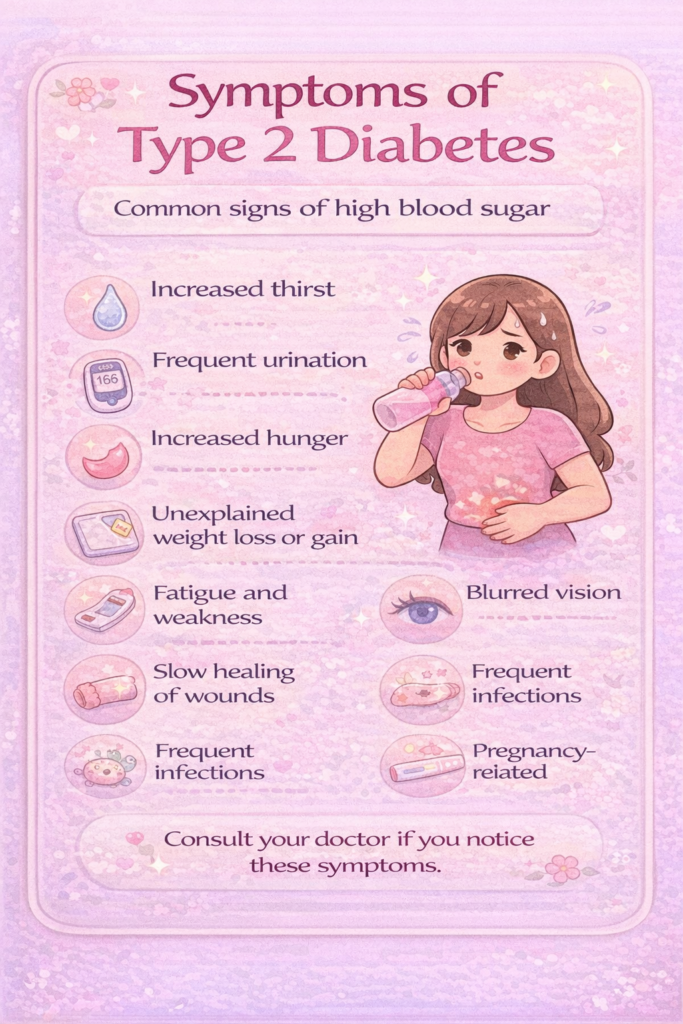
Type 2 diabetes often develops slowly, and symptoms may be mild or unnoticed in the early stages.
Common symptoms include:
Increased thirst
Frequent urination
Increased hunger
Unexplained weight loss or weight gain.
Fatigue and weakness
Blurred vision
Slow healing of wounds
Frequent infections (urinary, skin, vaginal)
Some people may have no symptoms at all and are diagnosed during routine health check-ups.
How Is Type 2 Diabetes Diagnosed?
Diabetes is diagnosed through blood tests that measure blood sugar levels.
Common tests include:
Fasting blood sugar
Post-meal (postprandial) blood sugar
HbA1c test (average blood sugar over 3 months)
Oral glucose tolerance test (OGTT) in selected cases
Early diagnosis allows timely treatment and prevents long-term complications.
What Are the Complications of Type 2 Diabetes?
If blood sugar levels remain uncontrolled over time, diabetes can affect multiple organs.
Possible complications include:
Heart disease and stroke
Kidney damage (diabetic nephropathy)
Nerve damage (diabetic neuropathy)
Eye problems and vision loss (diabetic retinopathy)
Foot ulcers and infections
Increased risk of infections
Good blood sugar control significantly reduces the risk of these complications.
Treatment of Type 2 Diabetes
Treatment is individualized and depends on age, blood sugar levels, and overall health.
1. Lifestyle Modification (Foundation of Treatment)
Lifestyle changes are the most important part of managing type 2 diabetes.
This includes:
Healthy, balanced diet
Regular physical activity
Weight management
Adequate sleep
Stress reduction
In early stages, lifestyle changes alone may be enough to control blood sugar.
2. Diet for Type 2 Diabetes
A diabetes-friendly diet focuses on steady blood sugar control.
Key principles include:
Eating regular meals
Choosing whole grains over refined carbohydrates
Increasing intake of vegetables and fiber
Limiting sugary foods and drinks
Reducing fried and processed foods
Including lean protein and healthy fats
Crash diets should be avoided, as they are not sustainable.
3. Physical Activity
Regular exercise improves insulin sensitivity and helps lower blood sugar.
Recommended activities include:
Brisk walking
Cycling
Swimming
Yoga
Strength training
Aim for at least 30 minutes of moderate activity on most days.
4. Medications
If lifestyle changes are not sufficient, medications may be prescribed.
These may include:
Oral anti-diabetic drugs
Injectable medications
Insulin (in selected cases)
Medication choice depends on blood sugar levels, age, weight, and associated medical conditions.
Can Type 2 Diabetes Be Reversed?
In some people, especially when diagnosed early, type 2 diabetes can go into remission with significant lifestyle changes and weight loss. This means blood sugar levels return to normal without medication.
However, continued healthy habits are essential to maintain remission.
Preventing Type 2 Diabetes
Prevention is possible, especially for people with prediabetes or risk factors.
Preventive measures include:
Maintaining a healthy weight
Regular physical activity
Balanced diet
Limiting sugary and processed foods
Regular health check-ups
Small, consistent changes make a big difference over time.
Frequently Asked Questions (FAQs)
1. Is type 2 diabetes curable?
Type 2 diabetes is not permanently curable, but it can be well controlled and sometimes reversed with lifestyle changes.
2. Can I have diabetes without symptoms?
Yes. Many people with type 2 diabetes have no symptoms initially. Regular screening is important.
3. What is a normal blood sugar level?
Normal fasting blood sugar is usually below 100 mg/dL. Your doctor will guide you based on specific tests.
4. Can stress increase blood sugar levels?
Yes. Stress hormones can raise blood sugar levels and worsen diabetes control.
5. Is insulin always required in type 2 diabetes?
No. Many people manage diabetes with lifestyle changes and oral medications. Insulin is used only when needed.
6. Can women with PCOS develop diabetes?
Yes. Women with PCOS have a higher risk of insulin resistance and type 2 diabetes.
7. How often should blood sugar be checked?
This depends on treatment type and control. Your doctor will advise an appropriate monitoring schedule.
8. Can diabetes affect pregnancy?
Yes. Poorly controlled diabetes can affect pregnancy outcomes. Good control before and during pregnancy is essential.
Key Takeaway
Type 2 diabetes is a common but manageable condition. With early diagnosis, healthy lifestyle choices, and proper medical care, most people can live a full and active life without major complications.
Regular follow-up, awareness, and consistency are the keys to long-term diabetes control.