
Light periods, medically referred to as hypomenorrhea, are a common menstrual concern among women of all ages. While some women naturally have lighter menstrual flow, a noticeable change in menstrual bleeding pattern may raise questions about hormonal balance, overall health, or fertility.
What Are Light Periods?
A period is considered light when the amount of menstrual bleeding is significantly less than usual or lasts for a very short duration.
Light periods may present as:
- Bleeding lasting 1–2 days
- Very minimal flow requiring only panty liners
- Spotting instead of regular bleeding
- Reduced bleeding compared to previous cycles
Normal menstrual blood loss ranges from 30–80 ml per cycle. Bleeding well below this range may be considered light.
What Is Considered Normal Menstrual Bleeding?
Normal menstruation typically involves:
- Cycle length: 21–35 days
- Bleeding duration: 3–7 days. Mild to moderate flow. The normal total amount of blood lost during a menstrual period is typically 30 to 80 milliliters (mL), which is equivalent to approximately 2 to 6 tablespoons.
- Gradual decrease in flow toward the end of the period
Menstrual flow varies from woman to woman, and lighter periods can still be normal for some individuals.
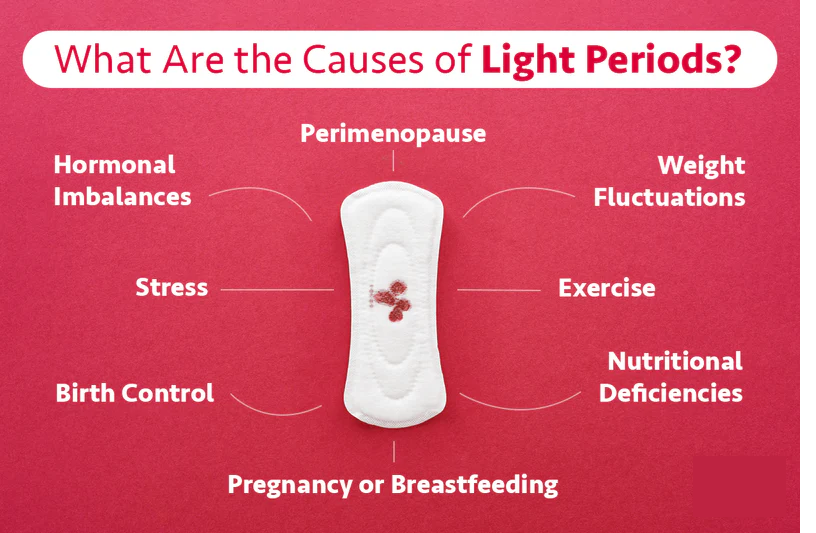
Common Causes of Light Periods
Light periods can occur due to several physiological, hormonal, or lifestyle-related factors.
- Hormonal Imbalance
Hormones such as estrogen and progesterone regulate the growth and shedding of the uterine lining. Low estrogen levels can result in a thinner endometrial lining, leading to light bleeding.
- Stress
Physical or emotional stress can disrupt ovulation and hormonal balance, resulting in lighter or shorter periods.
- Weight Loss or Low Body Weight
Sudden weight loss, restrictive dieting, or low body fat percentage can suppress ovulation and reduce menstrual flow. A common example is people suffering from Anorexia Nervosa often have very low body weight and light and irregular periods.
- Excessive Exercise
Intense physical training, especially in athletes, can affect hormonal regulation and lead to light or missed periods.
- Hormonal Contraceptives
Birth control pills, hormonal intrauterine devices (IUDs), and injectable contraceptives often cause lighter periods or even absent periods, which is generally harmless.
- Pregnancy
Light bleeding or spotting may occur in early pregnancy and can sometimes be mistaken for a light period. Pregnancy should always be ruled out if periods become unusually light.
- Polycystic Ovary Syndrome (PCOS)
PCOS may cause irregular ovulation, leading to delayed, light, or missed periods. Ovulation is generally irregular or absent in PCOS.
- Thyroid Disorders
Both hypothyroidism and hyperthyroidism can interfere with menstrual regularity and flow.
- Perimenopause
During the years leading up to menopause, hormonal fluctuations commonly cause lighter or irregular periods.
- Asherman’s syndrome – This is a condition in which scarring occurs inside the uterus after a surgery – especially after a D&C or D&E after an abortion or miscarriage. Radiotherapy can also sometimes cause scarring inside the uterus. Scarring can affect the endometrial lining leading to light periods.
- Nutritional Deficiencies: A lack of nutrients, particularly iron, can affect menstrual flow.
Causes of Light Periods at Different Life Stages
Adolescence
In the first few years after menarche, light and irregular periods are common due to immature hormonal regulation.
Reproductive Years
Light periods during this stage may be related to stress, lifestyle changes, or contraceptive use.
Perimenopause
Periods often become lighter, shorter, or irregular as ovarian function gradually declines.
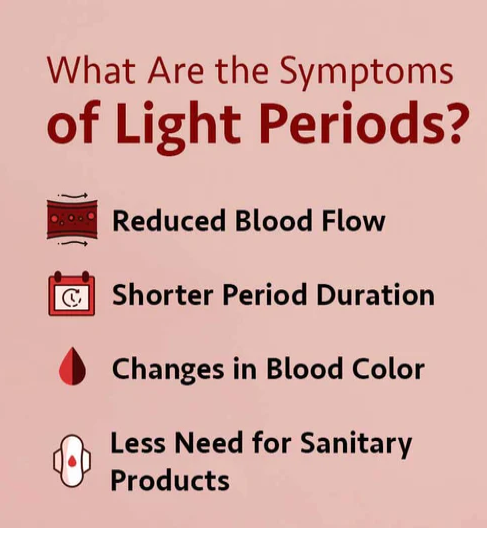
What are the symptoms of a light period?
A light period may present differently for every woman, but some common symptoms include:
- Reduced Blood Flow: You may notice less blood than usual, perhaps just spotting or a few light days of flow.
- Shorter Period Duration: A period typically lasting five days might be over in just two or three days.
- Changes in Blood Color: Lighter periods may also cause changes in the color of menstrual blood, which can range from light pink to brown.
- Less Need for Sanitary Products: If you normally use regular or super tampons and pads but now find yourself switching to light ones, it could be a sign your period is lighter than usual.
What Symptoms May Accompany Light Periods?
Light periods may occur along with:
- Delayed or irregular cycles
- Spotting between periods
- Reduced menstrual cramps
- Hormonal symptoms such as acne or hair changes
The presence of additional symptoms may provide clues to the underlying cause.
Do Light Periods Affect Fertility?
Light periods may indicate reduced ovulation or hormonal imbalance, which can sometimes affect fertility. However, light bleeding alone does not necessarily mean infertility.
Women trying to conceive who experience persistently light periods should consider medical evaluation to assess ovulation and hormonal health.
How Are the causes of Light Periods Diagnosed?
Medical evaluation may include:
- Detailed menstrual history
- Pregnancy test
- Blood tests to assess hormone levels
- Thyroid function tests
- Pelvic ultrasound if needed
- Hysteroscopy if scarring is suspected.
Evaluation helps determine whether light periods are normal for the individual or require treatment.
Treatment of Light Periods
Treatment depends on the underlying cause.
Lifestyle Modifications
- Maintaining a balanced diet and improving nutrition
- Achieving a healthy weight
- Reducing stress
- Moderating exercise intensity
- Adjusting contraception if it is the cause
Hormonal Treatment
Hormonal therapy may be recommended if light periods are due to hormonal imbalance or irregular ovulation.
Management of Underlying Conditions
Treating conditions such as thyroid disorders or PCOS often helps normalize menstrual flow.
When do light periods not need Treatment?
If light periods are due to hormonal contraception, adolescence, or perimenopause, treatment may not be necessary unless other symptoms are present.
When Should You See a Doctor?
You should consult a gynecologist if:
- Periods become suddenly very light
- Light periods persist for several months
- Periods are accompanied by delayed cycles
- You are trying to conceive
- There is associated pain or abnormal bleeding
Frequently Asked Questions (FAQs) – Light Periods
- Are light periods normal?
Yes. Light periods can be normal for some women, especially if cycles are regular and there are no other symptoms. - Can stress cause light periods?
Yes. Stress can interfere with ovulation and lead to lighter or shorter periods. - Do light periods mean low fertility?
Not always. Light periods do not necessarily mean infertility, but persistent changes should be evaluated. - Can birth control cause light periods?
Yes. Hormonal contraceptives commonly reduce menstrual flow. - Should I worry if my periods suddenly become light?
Sudden changes in menstrual pattern should be discussed with a doctor, especially if they persist. - Can light periods indicate pregnancy?
Yes. Early pregnancy spotting may appear as a light period. - Are light periods common before menopause?
Yes. Hormonal changes during perimenopause often cause lighter or irregular periods.
Light periods are often harmless and may occur due to normal hormonal variations, lifestyle factors, or contraceptive use. However, persistent or sudden changes in menstrual flow should not be ignored. Most cases resolve once the underlying cause is addressed.